
Dental Care
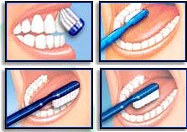
Brushing Tips:
- Use a soft bristled brush, preferably one with rounded, synthetic bristles.
- Replace your toothbrush approximately every two to three months or as soon as the bristles are worn or bent. A worn-out toothbrush does not clean your teeth properly, and may actually injure your gums. You should also replace your toothbrush after you've had a cold.
- Be sure your brush is the right size (in general, smaller is better than larger).
- Place the bristles at a 45 degree angle to the gum line, and slide the tips of the brush under the gums.
- Gently jiggle the bristles or move it in small circles over the tooth and gums.
- Brush the outside, the inside, and the chewing surfaces of your teeth. For chewing surfaces, use a light back and forth motion.
- For the front teeth, brush the inside surfaces of the upper and lower jaws: Tilt your brush vertically and make several strokes up and down with the front part of the brush over the teeth and gum tissues.
- Brushing your tongue will help freshen your breath. Debris and bacteria can collect on your tongue and cause bad breath.
- Since your toothbrush will only clean one or two teeth at a time, change its position to clean each tooth properly.
- Brush at least once every day, preferably at bedtime. Adding a brush time after breakfast increases your chances of thorough daily plaque removal.
- Take your time: A thorough brushing should take at least 3 minutes.
- Don't brush your teeth too vigorously, and don't use a hard bristled toothbrush, since it causes the gums to recede and exposes root surfaces. It also wears down the tooth structure. Both of these conditions can lead to tooth sensitivity.
- A pea-sized amount of fluoridated toothpaste is sufficient.
- Replace your brush when the bristles begin to spread, as a worn out toothbrush will not properly clean your teeth.