Virupaksha Temple: |
|
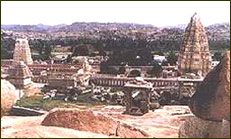
The Virupaksha Temple at the western end is
one of the earliest structures in the city. The main shrine is dedicated to Virupaksha, a
form of Lord Vishnu.
Overlooking Virupaksha temple to the South, Hemakuta hill has a scattering of early ruins
including Jain temples and a monolithic structure of Narasimha. |
|
Ugra Narasimha: |
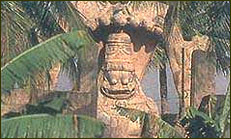
Nearby is the 6.7m tall monolith of Ugra
Narasimha. The gigantic image is situated in the south of the Hemkuta group of temples
that includes the Virupaksha Temple.
The Narasimha is a seated four-armed figure under a canopy of a seven-hooded snake. |
|
|
Vithala Temple: |
|
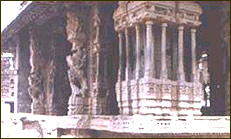
To the east of Hampi Bazaar is the Vithala temple, about 2 kms away. The ruins of the
temple is a World Heritage monument.
It is in a relatively good state of preservation. The temples incredible sculptural work
is a pinnacle of Vijayanagar Art.
The outer pillars are known as the 'Musical Pillars' as they reverberate when tapped,
although this
|
|
practice is now discouraged to avoid further
damage.
The temple also features an ornate stone chariot in the temple courtyard containing an
image of Garuda.
|
Shivalinga: |
The gigantic
Shivalinga is located next to the Narasimha figure. It is 3 m high and stands permanently
in water that comes through an ancient channel.
|
Lotus Mahal: |
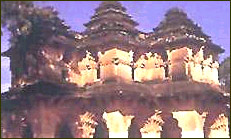
This graceful two-storeyed pavilion is
located in the 'zenana' enclosure. The palace is delightful synthesis of the Hindu and
Islamic styles of architecture. |
|
|
Virupaksha Bazaar: |
32 m wide and 728 m
long, this street that runs between the Virupaksha Temple and the foot of the Matanga Hill
is the longest street laid out by the Vijaynagara kings.
|
Queen's Bath: |

|
Situated in the citadel area, south of the
Hazaara Rama Temple the Queen's Bath is a large square structure, remarkable for the
contrast between its plain exterior and the very ornate interior.
The bath is 15-m square and 1.8 m deep and is surrounded by delicately decorated arched
corridors and projecting balconies. |
|
Singaradu Hebbagilu: |
Located behind the
elephant stables, this is one of the oldest and most massive of the gateways in the
capital city.
The gate called 'Singara Hebbagilu' or the beautiful door according to an inscription that
has been discovered near it, was the main entrance to the city.
|
Hazara Rama Temple: |
The temple built within rectangular complex
lies at the heart of the royal centre. Dating from the early 15th century, the hall of the
Hazara Rama Temple has finely carved basalt pillars depicting the incarnations of Shri
Vishnu.
Around the exterior walls of the hall are three rows of sculptures illustrating the main
events from the Ramayana. |

|
|
Achuta Raya Temple: |
The Tirvengalanatha
temple, which was built during reign of Achuta Deva Raya, is better known by the name of
ruler.
The temple within are in ruins, but some erotic sculptures can be seen in the columns
inside the open halls near the main gateway.
|
Top |
Back |


