|
|
Blood pressure profile: High blood pressure is the
primary cause of stroke. Work with your doctor to maintain an acceptable level of no more
than 140/90 mm Hg. If side effects of blood pressure medications bother you, change to a
different drug or use a lower dose and add another medication that works differently.
Don't give up!
Cholesterol profile: As with blood pressure, find a
combination of diet, exercise and medications that brings you to acceptable levels: a
total cholesterol less than 200 mg/dl, LDL below 130 mg/dl, and HDL above 35 mg/dl.
If you have diabetes, aim for optimum control. Again, diet, exercise and
medications are the keys.
|
|
If you are over 50, you are due for a baseline EKG. Your doctor may
mention that you have signs of atrial fibrillation, a defective movement of the heart's
upper chambers (the atria). It increases the likelihood of a stroke caused by a blood clot
forming in the heart and traveling to the brain. In most cases, atrial fibrillation should
be treated with the blood thinner, warfarin (Coumadin).
If you have had a TIA or stroke recently, you should also discuss with your doctor the
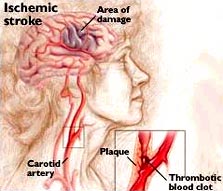
option of having a carotid endarterectomy. This procedure involves clearing fatty plaque
from one or both carotid arteries, the main arteries that run up the neck on the way to
the brain. The procedure is not without risks, and the potential benefits must be
carefully considered for each individual. It is more likely to be worthwhile for those
with severe artery disease, and for those who have recently experienced a stroke or TIA.
Recognize a stroke and act quickly
Most important of all, know the symptoms of a stroke. Don't waste time trying to contact
your regular doctor. Medications that can stop a stroke in its tracks and even reverse it
are available, but must be administered within three hours of the onset of symptoms.
Symptoms of a stroke include:
Sudden blurred or decreased vision, possibly in only one eye
Sudden weakness of any part of the body
Difficulty speaking or understanding conversation
Dizziness or loss of coordination
Sudden intense headache
If any one of these occur, call a heart specialist immediately.
Because strokes don't cause pain, many people with minor or only fleeting symptoms adopt a
"wait-and-see" approach, a mistake that can lead to permanent disability or even
be fatal.
|
|
|