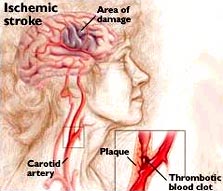
Strokes occur either when a blood vessel in
the brain bursts (a type known as a hemorrhagic stroke) or more commonly, when a blood
vessel becomes blocked (known as an ischemic stroke). Either way, unless blood flow is
restored, brain cells in the area quickly die, leaving permanent disability. Sometimes, a
temporary blockage occurs, causing symptoms of a stroke only briefly. Known as a transient
ischemic attack (TIA), it is often a harbinger of a serious stroke.
Everyone over age 50 should be knowledgeable about strokes.
Not all risk factors can be controlled, but many can. Whatever your risk profile, reduce
your chances by taking the following steps:
|